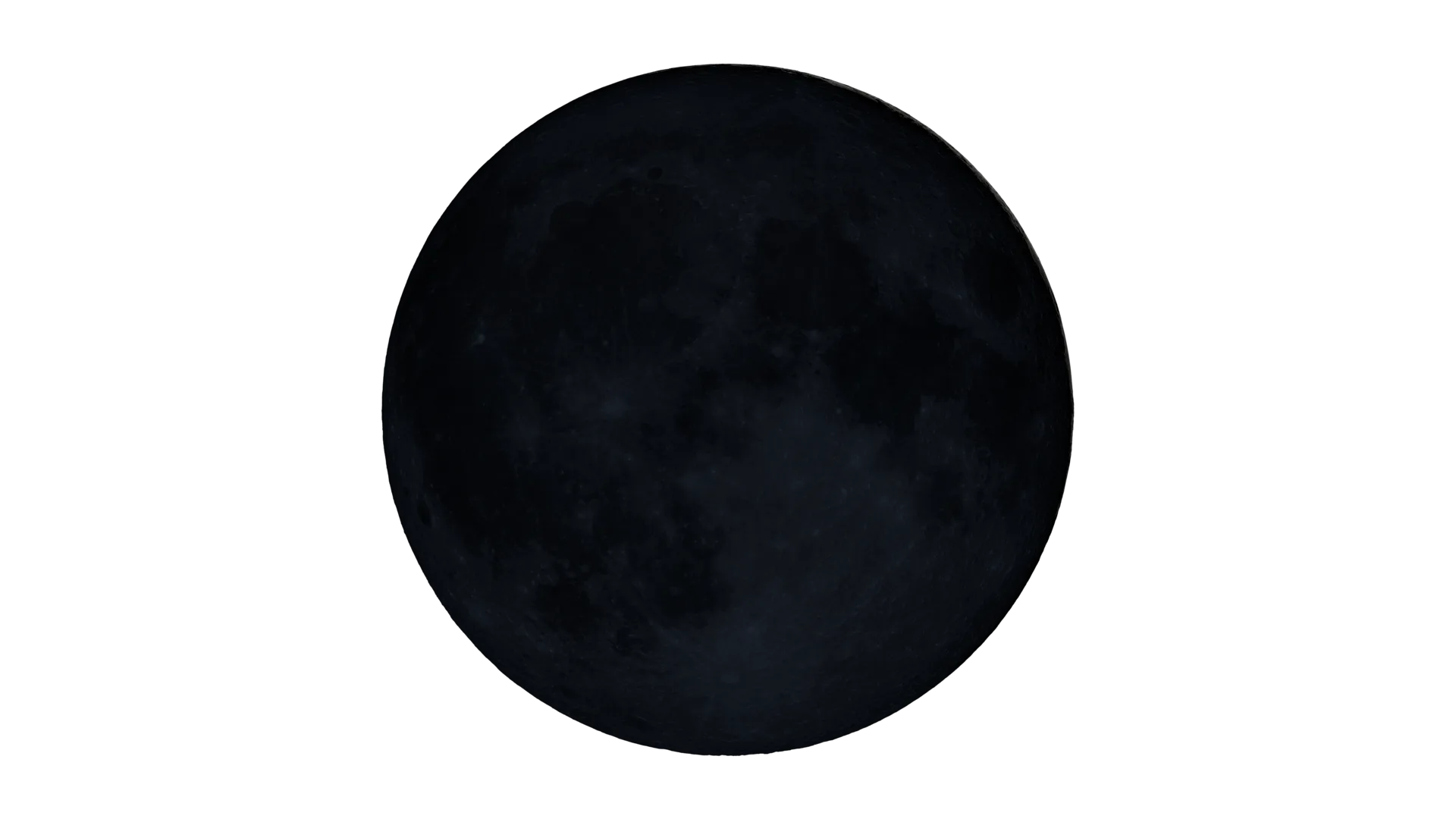
A planet the size of Mars is falling toward Earth—blazing across the sky at twenty thousand miles an hour. It swells by the second until it fills the heavens. Then comes impact. Oceans of rock flash to vapor. The surface of the planet melts into a single incandescent sea. In that instant, the world as it was ends—and two new worlds begin to form.
Four and a half billion years ago, the solar system was crowded and violent. Dozens of young worlds jostled for space, their orbits unstable, their paths crossing again and again. One of them—now called Theia—collided with the early Earth in a catastrophe beyond anything our planet has known since. The force was enough to shatter both worlds. A storm of molten rock blasted into orbit, wrapping the ruined Earth in a glowing halo of debris.
From that chaos, two worlds were born: the Earth we know—and the Moon, bound to it ever since.
For decades, scientists imagined the Moon forming slowly, grain by grain. Dust gathered into clumps, clumps into boulders, boulders into a sphere over long stretches of time. But newer simulations tell a stranger story. The Moon may have assembled in mere hours—a sudden birth forged from fire, gravity, and ruin.
That violent origin explains a remarkable truth: the Moon is made mostly of Earth. Its rock was once our crust and mantle, blasted outward and gathered again by gravity into something new. But Theia left more than scars—rocks carrying water and gases survived the collision and became part of Earth itself, providing the raw materials for oceans and air. The evidence may still be with us: two continent-sized regions of unusually dense rock deep beneath Earth’s surface may be remnants of Theia’s interior. Matching chemical signatures appear in samples returned from the Moon. Earth and Moon, it seems, are twin vessels, formed from the same catastrophe, carrying pieces of the same lost world.
The Moon is not just a satellite. It is a frozen sibling, born of the same impact, shaped from the same matter. One world surged back to life: molten, restless, alive with oceans, weather, and change. The other cooled and went quiet. Airless. Still. Yet without it, Earth would have no tides. No eclipses. A far less stable climate. Perhaps no life as we know it.
A single origin.
Two very different destinies.
And a relationship that has shaped every night since.