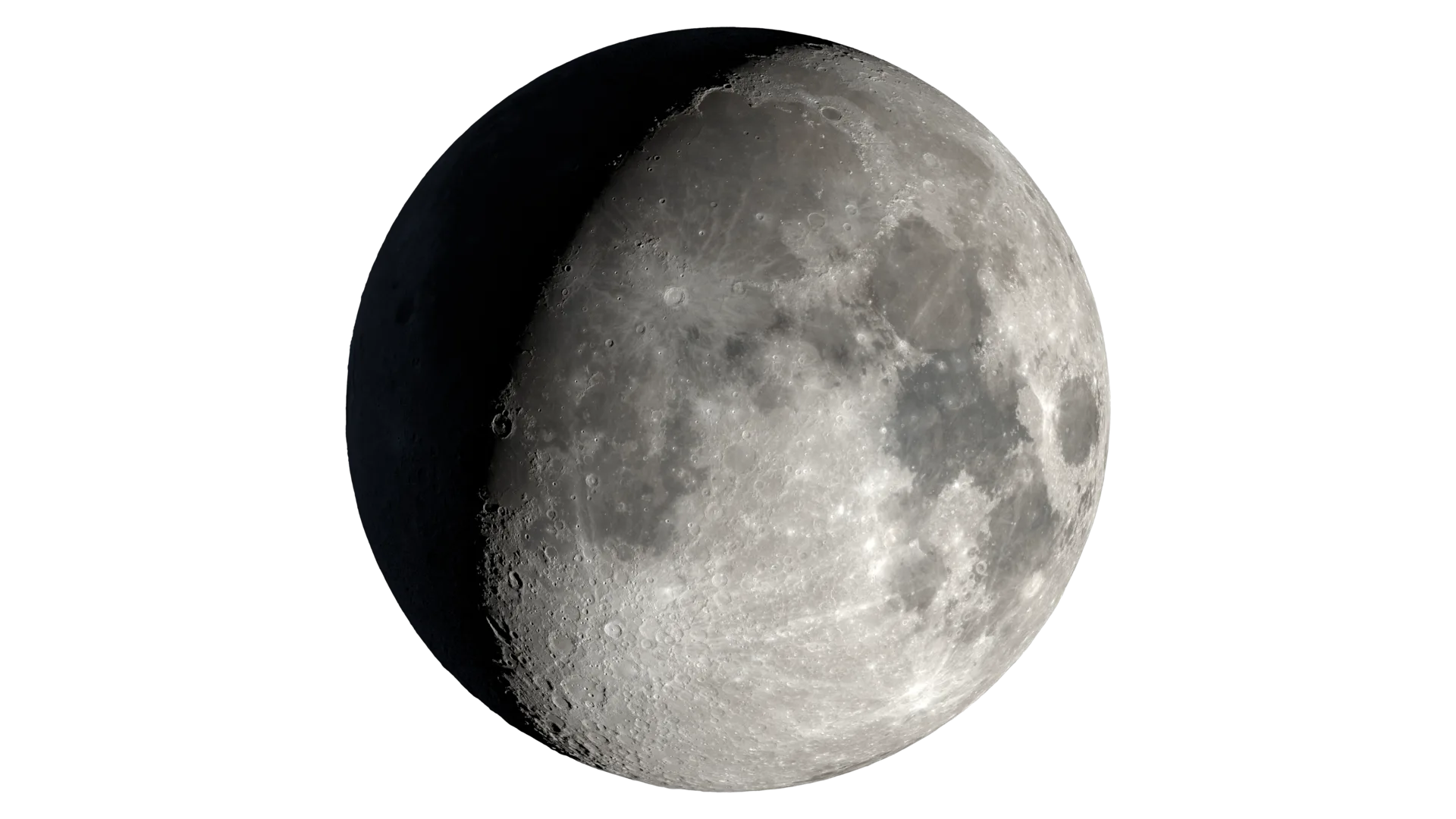
“Blood Moon.” The nickname is ominous, but the event is straightforward: a total lunar eclipse. The Earth slides perfectly between the Sun and the Moon, casting its shadow across the lunar surface. Astronomers call this syzygy, the Scrabble-worthy word that describes when celestial bodies fall into a straight line.
During the peak of such an eclipse, the Moon falls into Earth’s umbra—its full shadow. The only sunlight that can reach the Moon has skimmed through Earth’s atmosphere along our planet’s rim. That air bends the light into the shadow and filters it: short blue wavelengths are scattered away, while the deeper reds and oranges pass through. Those red rays paint the lunar surface a dim copper. It’s the same physics that sets sunsets ablaze, now painting the Moon with the colors of fire and dusk.
As with solar eclipses, ancient skywatchers feared these crimson moons. Some saw them as omens of war, death, or divine judgment. The Inca believed a Jaguar attacked the Moon, leaving it bloody and wounded. In Mesopotamia, a lunar eclipse could trigger the šar pūḫi ritual: a commoner crowned as a substitute king, fated to absorb the celestial curse. The real ruler vanished into hiding, only to reemerge once the Moon’s shadow had passed—restored, purified, spared. The substitute, meanwhile, was executed, sacrificed to seal the omen’s power and reset the cosmic balance.
Unlike a solar eclipse, which draws a narrow line across Earth, a lunar eclipse is a hemispheric show: anyone on the night side can watch it, weather and horizon permitting. The next one falls on New Year’s Eve, 2028—already the one night millions spend outside, eyes skyward, waiting. It happens to be a blue moon, the second full moon of the month, which means you can say it literally: a once-in-a-blue-moon Blood Moon on the last night of the year. Totality lasts over an hour. Europe, Africa, and Asia get the prime view; the West Coast of North America catches it low on the western horizon at dawn, a red moon setting as the last day of 2028 begins. No special glasses, just patience; binoculars help. A lunar eclipse is unhurried, letting you savor the color change, minute by minute, as the world quietly turns.