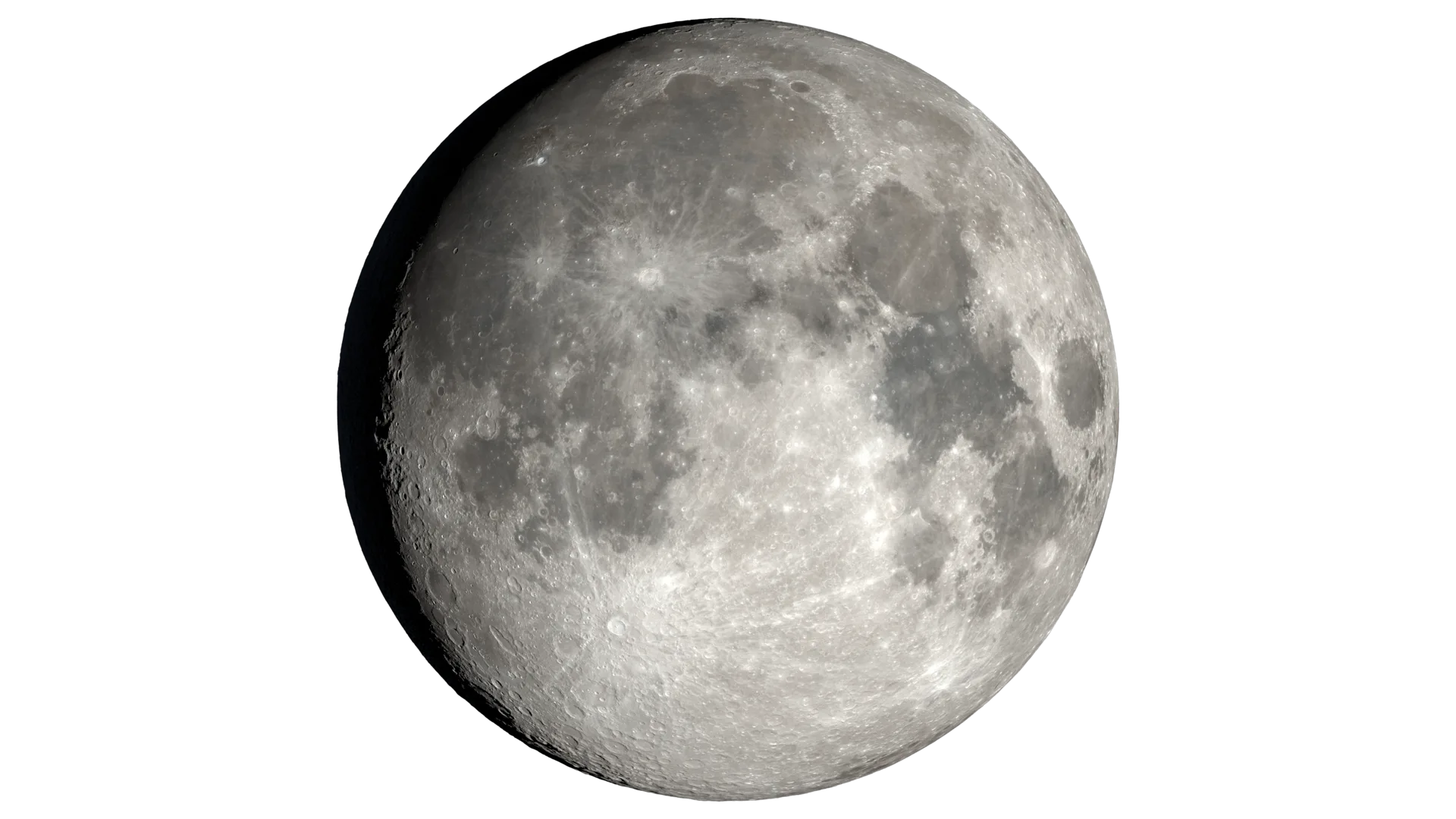
In ancient Rome, the Moon didn’t just light the sky—it governed the clock. Months were not abstract grids of numbered days, but living spans shaped by the Moon’s changing face. Each Roman month turned on three lunar anchors: the Kalends, the Nones, and the Ides. Time didn’t count forward in uniform blocks; it waxed, brightened, and culminated.
The Kalends marked the reappearance of the Moon’s first thin crescent. Priests watched the western sky and formally proclaimed its arrival, announcing the month’s rhythm of festivals and sacred days in advance. Time began in public view, with a proclamation. The Kalends also set the civic and financial clock. Debts recorded in the kalendaria—account books named for this very day—fell due when the month was called. Contracts renewed. Obligations matured. To announce the Moon was to announce law, labor, and money. Time and trust rose together with the crescent.
The Nones, aligned with the Moon’s first quarter, served as a waypoint: the month was underway, not yet complete. Then came the Ides, at or near the full Moon—days of gathering and consequence, sacred to Jupiter, marked by feasting and public life. Before streetlamps, a full Moon made the city larger; business continued, crowds lingered, travel was safer. Today, the Ides are remembered less for their light than for their blood. On the Ides of March in 44 BCE, Julius Caesar was assassinated—but that drama only makes sense in a world where the Ides already carried weight, where a full-Moon night drew people together and amplified consequence.
Rome’s calendar was never purely lunar—the Moon doesn’t keep perfect time, and its phases drift against the seasons. Priests corrected the system by proclamation, and later reforms aligned the calendar more closely with the Sun. Yet even as solar time took precedence, the lunar scaffolding remained. The language stayed. The rituals endured. We remember the Kalends in calendars. We remember the Ides as a warning. And beneath both lingers an older truth: before clocks and numbers, the Moon carved time where everyone could see it—across the night sky.