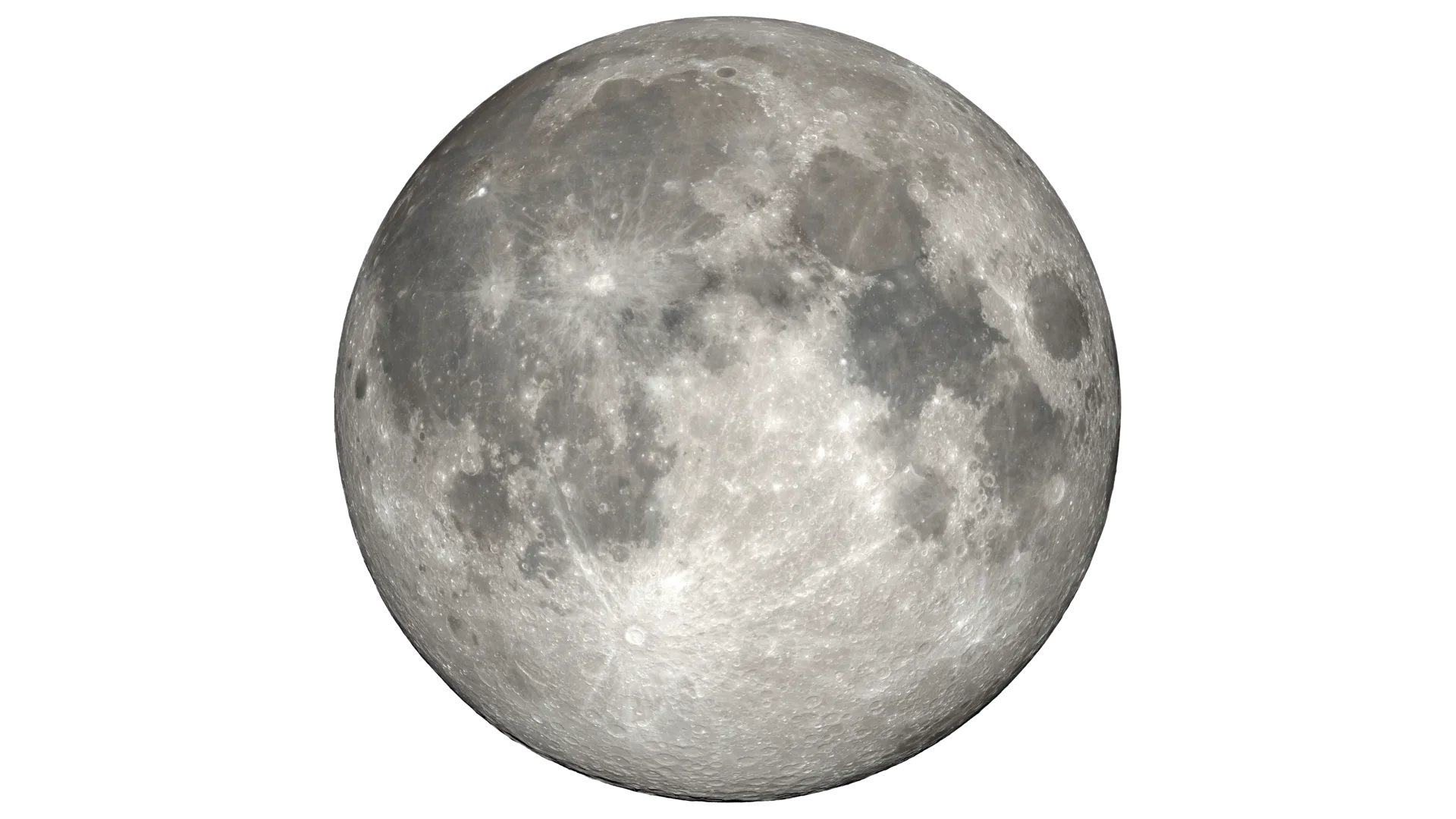
This is the Moon at its fullest—bright enough to stop you in your tracks.
Across cultures and centuries, the full Moon has been both lamp and calendar: practical light you could walk by, and a monthly appointment that gathered work, worship, travel, and talk into the same wide circle of silver.
From our modern perspective, overflowing with artificial light, it is hard to imagine how deeply human rhythms were shaped by whatever light the Sun or Moon made available. Day’s work began at first glow; dusk closed shops and courts. Candles were costly—tallow smoky, beeswax a luxury—so nights shrank to hearth-tasks, prayer, and sleep unless a full Moon opened the road. When it did, the world stretched outward. Market days clustered. Caravans moved. Fishermen worked longer tides. News traveled farther. The full Moon didn’t just illuminate—it extended the usable hours of human life.
That brightness gathered meaning. In ancient China, families celebrated the Mid-Autumn Festival beneath its glow, lighting lanterns and sharing mooncakes in honor of reunion and abundance. In India, full-Moon nights marked Kartik Purnima and other festivals, when rivers shimmered silver and prayers rose skyward. Across Europe, the full Moon governed planting and harvest, its round face marking times of fertility, transformation, and luck. Even the word honeymoon carries its trace, a belief that marriages begun beneath a full Moon would be especially sweet and fruitful.
Under its light, strangers met, stories spread, and the world felt briefly larger and more connected. Long after we stopped needing its brightness, we kept its meaning.
The full moon has never lost its hold on us. Its light once made civilization possible after dark, pulling people outward, together, into shared time. Light, too, has gravity. And when that work became less necessary, it followed us indoors. We carried it into stories, into the quiet choreography of night. For generations, we have said goodnight to the Moon—soft words in dark rooms, whispered to children who would one day look up and wonder for themselves.