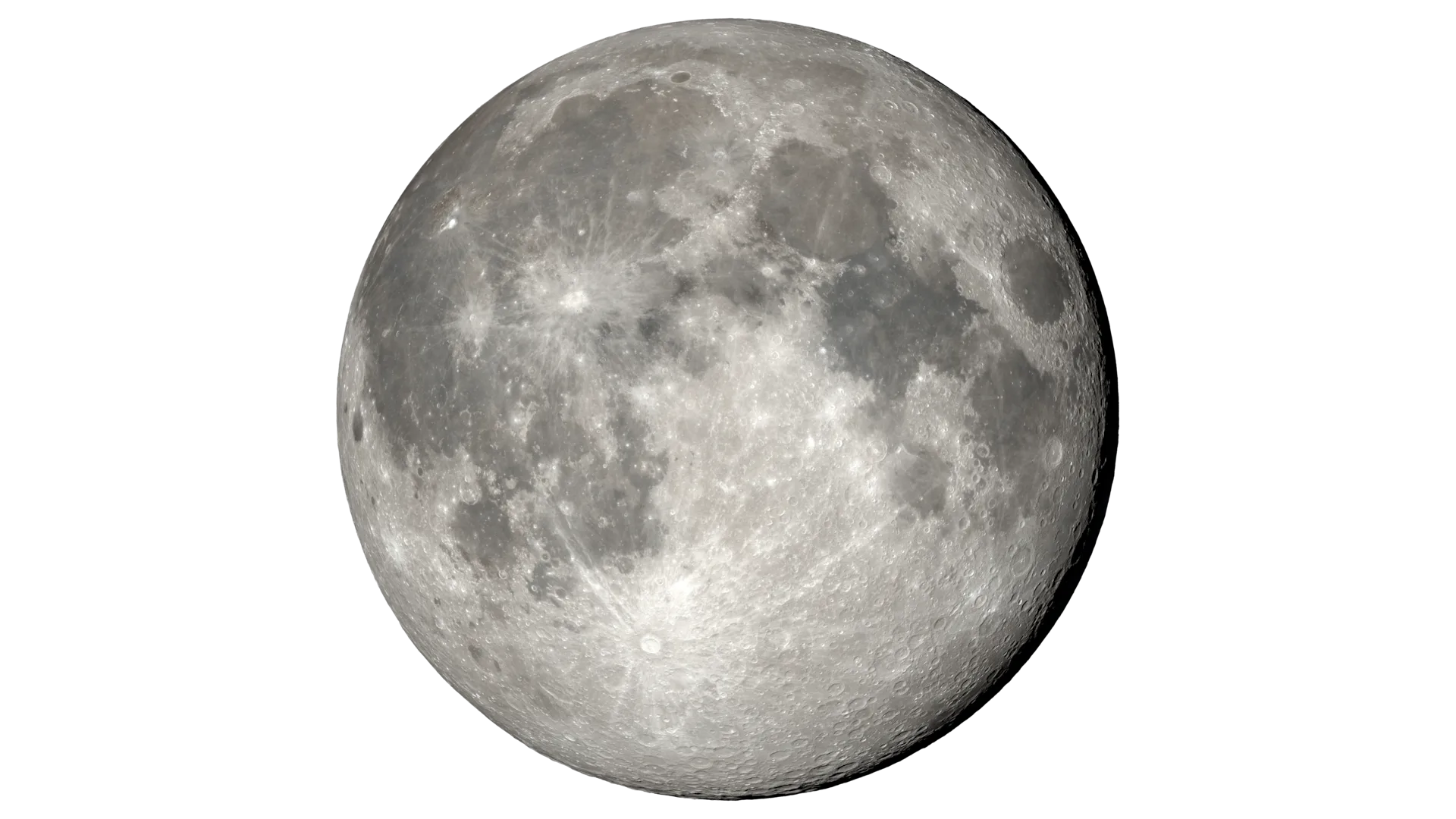
Watch the Moon rise on a clear night and you’ll see two things at once: a disc tinged amber, warm as firelight, and a disc that seems enormous—far larger than when it hangs overhead at midnight. These are two separate phenomena. The color is real, produced by the same atmospheric scattering that turns sunsets red: the Moon’s light must pass through many more miles of air when it rides low, and that air filters away the blue, leaving the deep reds and oranges behind. But the size? The size is manufactured entirely by your brain. The Moon’s diameter doesn’t change by a single mile. The illusion has bewildered skygazers for three thousand years, and three thousand years of staring haven’t fully solved it.
Ancient astronomers recognized the puzzle but couldn’t crack it. Aristotle attributed it to atmospheric magnification—a reasonable guess, and wrong. Ptolemy measured it. The breakthrough came in eleventh-century Cairo, where the scholar Ibn al-Haytham—known in the West as Alhazen—was composing what would become one of the most influential scientific works ever written. His Book of Optics dismantled centuries of received wisdom about light and vision, including this. The illusion, he argued, wasn’t in the sky. It was in the mind. No instrument could measure it because there was nothing physical to measure. He was right, and the insight was a thousand years ahead of its time.
Modern neuroscience has gotten closer—but not all the way. The leading theory holds that the brain uses surrounding objects as reference points: a Moon framed by rooftops or treelines reads as enormous because the visual system scales it against familiar things. Overhead, stripped of context, the same Moon shrinks. A competing theory cuts deeper: the sky itself doesn’t look like a hemisphere to us—it looks flattened, like an inverted bowl with its rim closer than its top. When the Moon sits near that rim, the brain judges it to be farther away, and since it covers the same angle regardless, concludes it must be physically larger. Both theories have merit. Neither is complete. After three thousand years of careful looking, we are still working it out.
Test it yourself next full Moon. Watch it rise, seemingly enormous, above the landscape. Then check again at midnight, when it rides high and seemingly shrunken. Hold a coin at arm’s length: the Moon covers exactly the same angle both times. Or try this—bend over and view the rising Moon upside down through your legs. For many people, the illusion collapses entirely. The brain, deprived of its usual orientation, stops manufacturing what isn’t there.
Here is the strange thing: you can hold the coin to the sky, confirm the angles match, put it away satisfied—and the illusion will still be there waiting for you tomorrow night. The Moon hasn’t moved. Your brain hasn’t learned. Some illusions survive being understood.