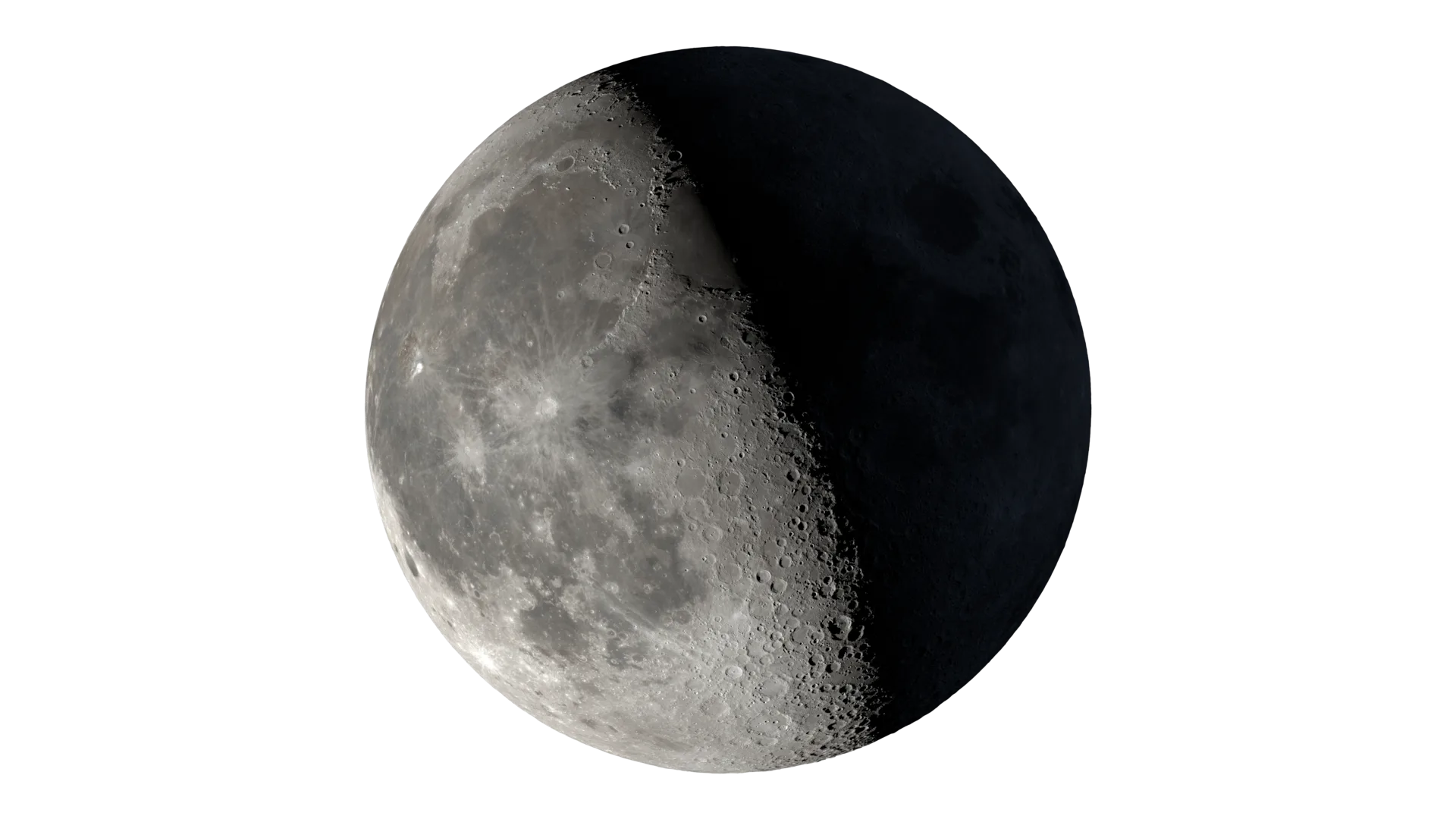
Long before rockets, we told stories of those who reached the Moon—not by engineering, but by accident, transgression, or divine whim. For most of human history, lunar travel wasn’t a triumph. It was a consequence. The Moon was the ultimate elsewhere: a place of exile, punishment, or unreachable refuge.
In China, Chang’e, wife of the archer Hou Yi, drank a stolen elixir of immortality and floated skyward. She was meant to share it, but legend says she took it alone—and fled to the Moon. There she remains, luminous and distant, with only a jade rabbit for company. Immortality, yes—but at the cost of solitude.
The Aztecs imagined a bloodier ascent. Their moon goddess Coyolxauhqui led her siblings in a plot to kill their mother and the unborn Sun. She failed. Her brother, Huitzilopochtli, burst into the world fully armed, struck her down, and hurled her dismembered body into the sky. Her shattered form became the Moon; her scattered brothers, the stars—forever chasing her across the night.
And then there is the man in the Moon’s face: the German peasant with a bundle of sticks. Caught gathering firewood on the Sabbath, he was banished skyward as punishment. A moral lesson burned into the night. Work when you shouldn’t, and you might end up alone forever. We’ve long projected our own social rules onto the Moon’s cratered face, transforming local laws into celestial ones and making human punishment as inescapable as gravity.
These were not explorers chasing a frontier. The Moon served as a high-altitude morality play, a place where human rules hardened into cosmic law. We projected guilt, exile, and consequences onto its cratered face. It seems the idea of an empty Moon has always felt unbearable. A haunted sky was easier to live with than a silent one.
Long before we left footprints in the dust, we had already filled the Moon with our outcasts. Not conquerors, but the punished. Not pioneers, but the removed. We sent our stories there first—and only later followed them ourselves.