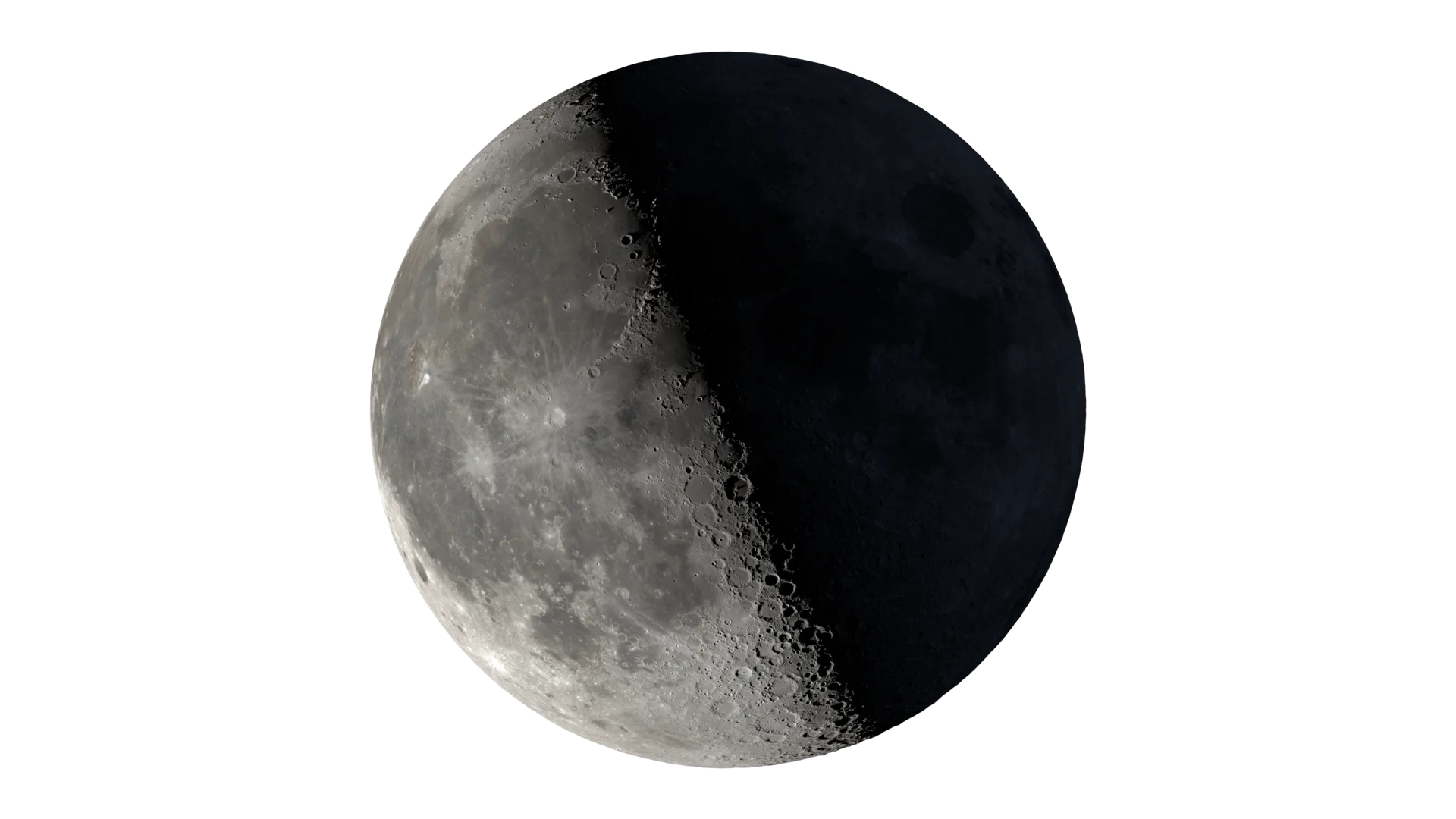
Earth isn’t a steady platform; it’s a lopsided top. As it spins, it wavers, tracing a slow, circular path across the heavens that takes 26,000 years to complete—a cycle the ancients called the “Great Year,” what we now call axial precession, driven by the persistent gravitational tug of the Moon. A movement so gradual it takes roughly 72 years to move just one degree. For most of us, the sky shifts by a single tick mark in a lifetime.
Because this wobble is so slow, it was nearly invisible until the philosopher Hipparchus spotted it in 130 BCE. He realized the entire sky had slid, carving history into 2,160-year “Ages.” Each is defined by which constellation sits behind the Sun on the spring equinox; today, we are poised between the age of Pisces and the dawn of Aquarius. This shift also means the Zodiac is out of sync. For those who follow the signs, the Moon has quite literally shifted their destiny: if you were born a Leo, the Sun was sitting in Cancer.
Even the “North Star” is just a temporary title. Today, Polaris is our anchor, but it’s just passing through. When the Egyptians were building the Great Pyramid, they navigated by Thuban. In 12,000 years, the title will fall to Vega, a blazing blue-white star that will redefine north. Ancient monuments like Stonehenge, once precision-tuned to the cosmos, now stand slightly out of sync—stone calendars whose alignments have been outrun by the sky.
Earth’s wobble breaks the illusion of a static sky. The landmarks we consider fixed are actually in transit. We occupy a world that is constantly recalibrating, shifting its orientation on a scale that outlives entire empires. Over the course of our lives, the planet is quietly redrawing the night. Look up. You’re catching a 26,000-year transition in progress—a transformation so vast the Moon has watched it play out before, and will again.