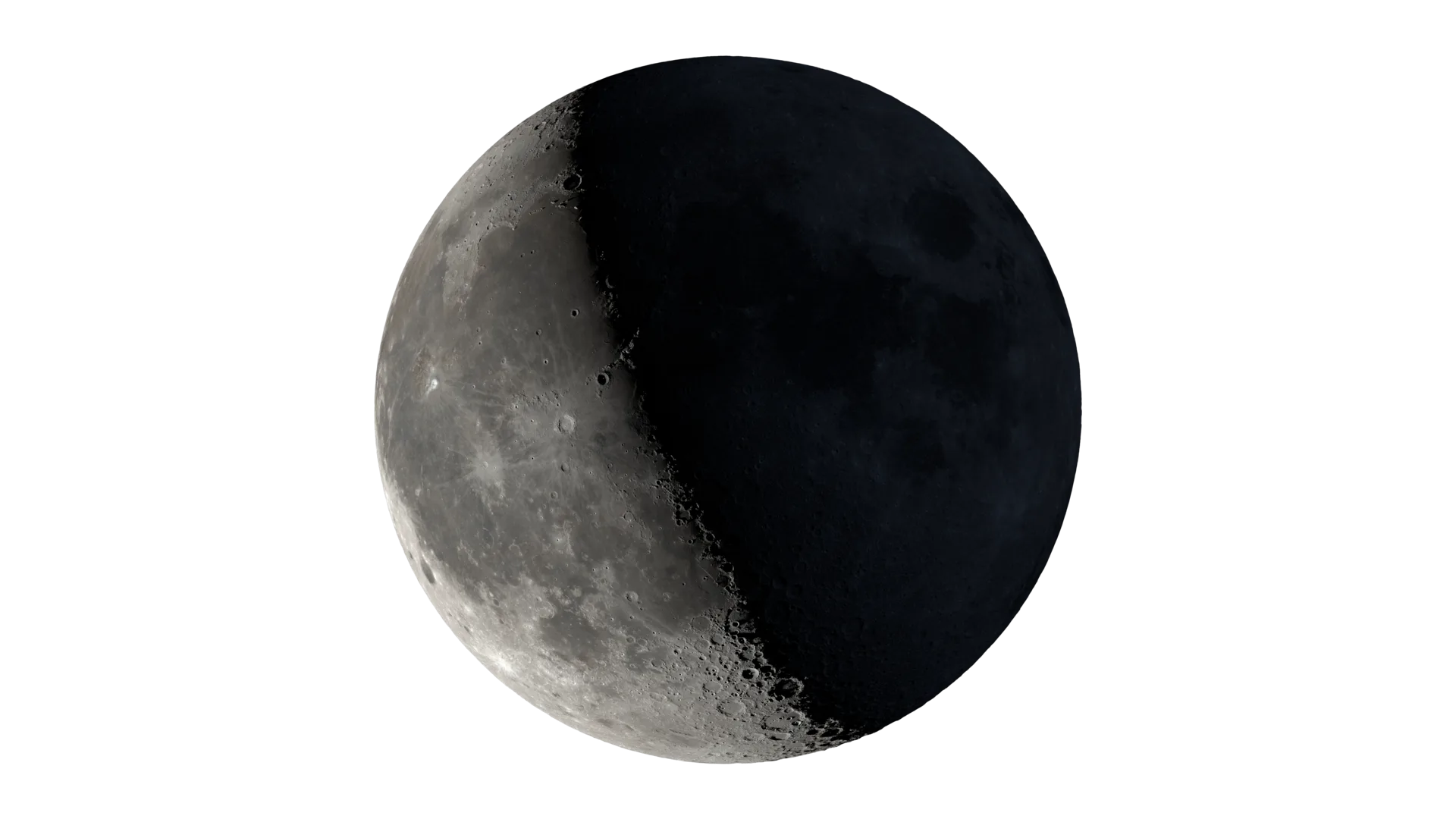
In 1846, news of a startling discovery broke in Toulouse, France. Astronomer Frédéric Petit declared that Earth had a second Moon—one that zipped around the planet every two hours, skimming just seven miles above the surface.
It was a claim that strained the limits of nineteenth-century credulity. Petit’s theory collapsed quickly under scrutiny. Fellow astronomers refuted the findings, and no one knows for certain what Petit actually witnessed through his telescope. A stray bird? A trick of optics? A brief, bold fabrication?
But Earth does, from time to time, acquire new companions. Every so often, our gravity snags a drifter, a stray asteroid no larger than a city bus, pinning it into a temporary, unstable orbit. We call them “mini-moons.” Most arrive and depart in silence, invisible to all but the most sensitive sky surveys. A few, like one dubbed 2006 RH120, stay for months of erratic looping before the sun’s pull yanks them back to the void. Brief hitchhikers in Earth’s gravity well, here for months, then gone.
The most dramatic arrived in 2024. Designated 2024 PT5, it measured just ten meters across—small enough to miss on a cloudy night, but large enough to trigger alerts from the ATLAS sky survey. For two months, it traced a chaotic, horseshoe-shaped orbit around Earth. Then it was gone. Spectral readings revealed a twist: this may not have been a random rock, but a fragment of our Moon itself, knocked free by an ancient impact, wandering for eons, now briefly returning to the world that ejected it.
Scientists eventually dismissed Petit’s wild claim, but the idea found a second life in fiction. In his 1870 novel Around the Moon, Jules Verne plucked the already-debunked satellite from obscurity to explain a near-disaster. As his protagonists hurtle toward the Moon, a bright, rapidly moving body screams past their projectile before vanishing into the night. Mission leader Barbicane identifies the phantom for his startled companions as Earth’s hypothetical second satellite, attributed to “a French astronomer, M. Petit.” It was a discarded theory resurrected as high adventure—proof that in literature, even a mistake can orbit forever.