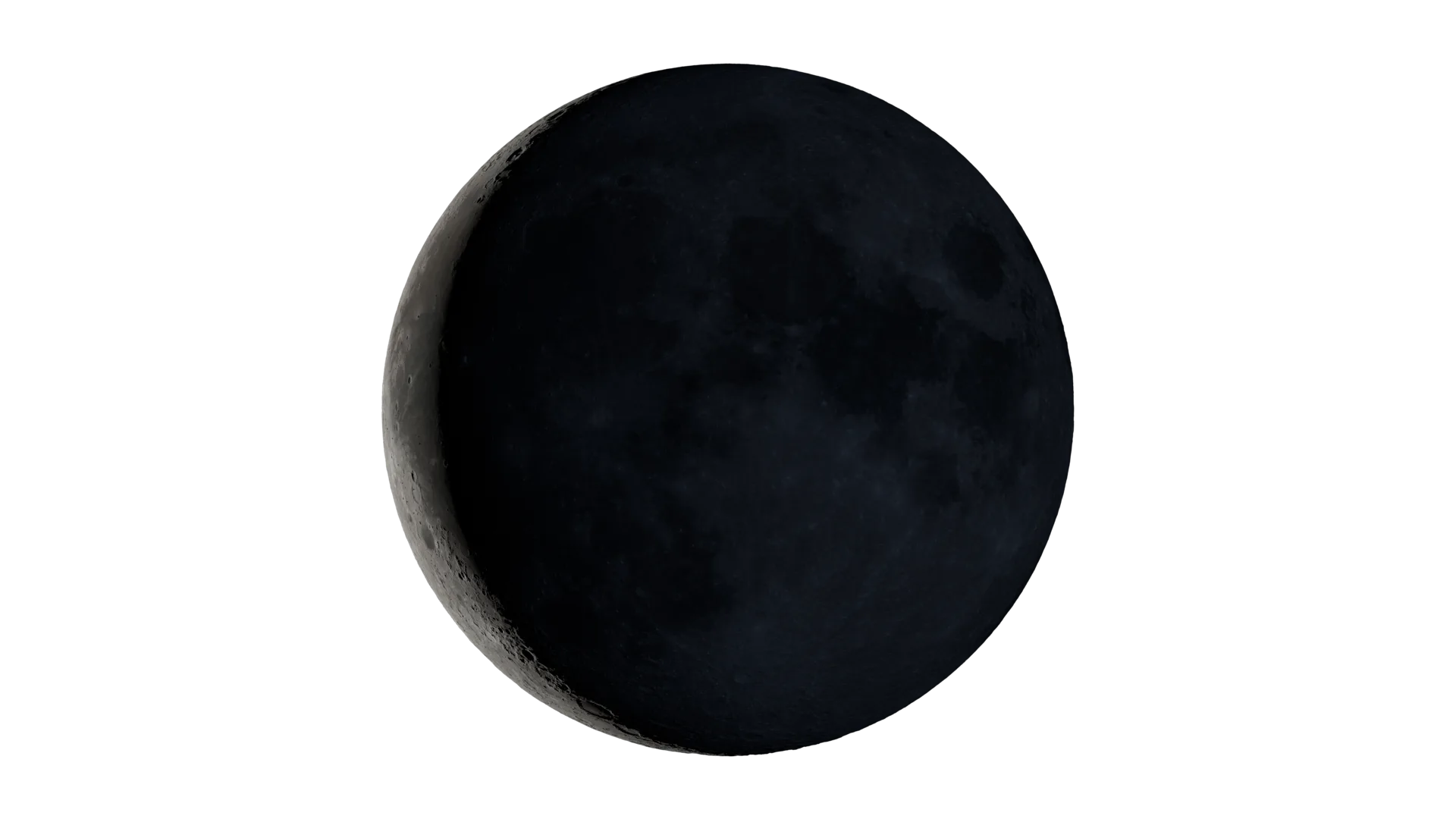
“Magnificent desolation.” These words—Buzz Aldrin’s first impression of the lunar surface—capture the brutal poetry of Earth’s nearest neighbor. If our Moon welcomes, it is only with a harsh indifference.
The lunar day stretches 14 Earth days under merciless sunshine, temperatures soaring to 260°F. Despite a carefully timed early lunar morning landing, the ground under Aldrin’s boots was already scorching. Then the swing into a long night: another 14 days long, with temperatures falling toward –280°F. With no air, there is no wind, no weather, no sound. Strike a tool on a rock and the vacuum carries nothing; you hear only what your gloves and helmet conduct back into your bones.
The lunar surface is coated in dusty regolith, which is the loose, inert debris of rocky crust formed by impacts and wild temperature swings. Micrometeorites shattered rock into glass-sharp grit. On Earth, wind and water continuously smooth the edges of rough particles, but the Moon has neither. The dust clings with static charge, scours fabrics, gums up seals, and sneaks into every joint. When the astronauts popped their helmets, many reported the same first whiff: something like burnt gunpowder—the smell of fresh, fractured minerals meeting oxygen for the first time.
The Moon’s low gravity—one-sixth that of Earth—creates deceptive danger. Astronauts discovered that familiar movements become treacherous ballet. The brain, calibrated to Earth’s pull, misjudges every leap and turn. Several fell, their bulky life-support systems nearly impossible to right without assistance. The vacuum compounds every risk: solar radiation, unfiltered by atmosphere or magnetic field, degrades materials and bodies alike. Plastics become brittle, fabrics weaken, electronics fail. Human biology fares worse without shielding—DNA frays; cells revolt. Still, some things achieve a kind of immortality out there: flags bleaching to white, foil wrinkled and bright, descent stages exactly where we left them, all slowly sun-washed but essentially unchanged.
For the twelve who walked there, our fragility was palpable. Against the void of space, Earth hangs as a blue bead, exquisitely suited for life. The lesson is blunt but beautiful: we are creatures of a very particular world. Step beyond it, and we survive by artifice—by layers of fabric, glass, science and mathematics. The Moon makes that truth plain: most of the universe is hostile. We are exquisitely matched to the one home that cradles us.