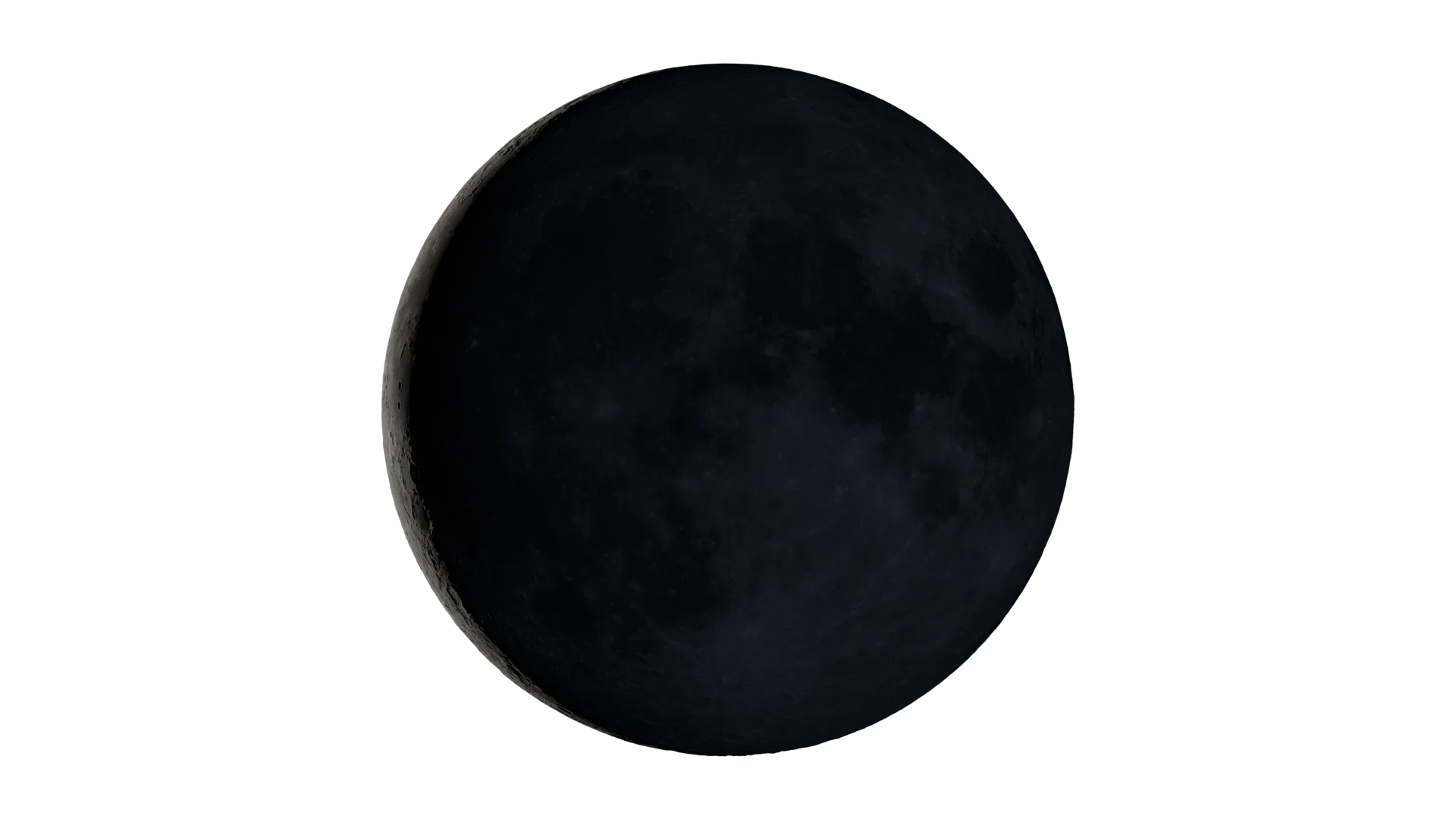
Catch a glimpse of the crescent Moon in twilight and you might notice something uncanny—a ghostly illumination cradling the unlit portion within the crescent’s horns. Ancient skywatchers called this ethereal phenomenon “the old Moon in the new Moon’s arms” or “the ashen glow.” For centuries that ash-gray glow puzzled observers—a whisper of light where logic said there should be none.
Leonardo da Vinci was the first to crack the celestial puzzle in the early 1500s. In his notebooks, between flying machines and anatomical sketches, he explained the truth: earthshine is sunlight that strikes Earth, bounces into space, and bathes the Moon’s darkened portion. “The Earth, in fair weather, performs the same office for the part of the Moon that does not receive the Sun’s light as the Moon does for us.” It was an insight that revealed the reciprocal relationship between worlds, each illuminating the other in cosmic partnership. On the Moon itself, a “full Earth” would wash the ground in pale light—dozens of times brighter than the full Moon we know—strong enough to cast shadows.
You can catch it with the naked eye. Look low in the west 1–4 evenings after a new Moon (or low in the east 1–4 mornings before). The slender crescent and the contrast between direct sunlight and earthshine create a three-dimensional effect that seems to pop the Moon out of the flat sky. On clear, still nights, maria and highlands float in gray relief like continents on a dim globe.
The brightness of earthshine varies with our planet’s reflectivity—its albedo. Fresh snow, expansive cloud systems, and gleaming oceans all amplify Earth’s ability to cast light moonward. Winter months typically produce the most striking displays as snow cover increases Earth’s reflectance. Dusty skies, darker oceans, shrinking ice: they dim it.
Modern observers use precise earthshine photometry—comparing the bright crescent to the ash-gray face—to track subtle albedo shifts over years, a proxy for changes in clouds, ice, and aerosols. What once inspired poets and puzzled philosophers now serves as a distant thermometer for planetary health. Like a feverish patient assessing their condition in the mirror, we look to Earth’s lunar reflection to monitor our warming climate.