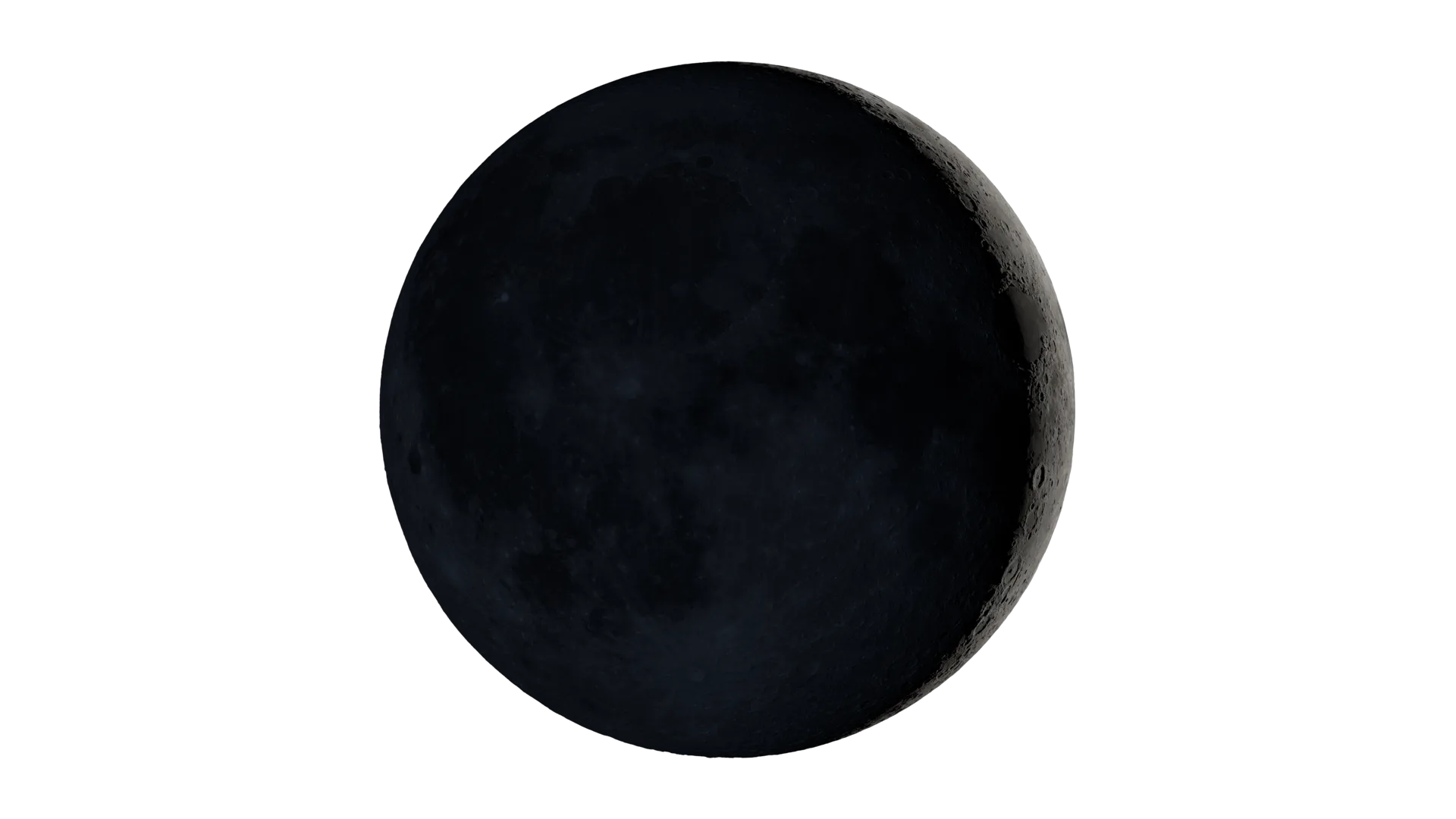
Look at a bull. Now look at a crescent Moon. The geometry is so similar that for most of human history the two were nearly inseparable. Cave walls at Lascaux and Chauvet are crowded with aurochs—their sweeping horns unmistakably crescent-shaped. Whether those Paleolithic painters saw the lunar connection, we can’t say with certainty. But by the time cities rose along the Nile and the Tigris, the link was explicit, theological, and everywhere.
In Egypt, Hathor’s crown—silver horns cradling a solar disc—announced her as midwife to both Sun and Moon. In Sumer, cuneiform tablets mark the moon-god Sîn with the same twin arcs, and royal seals show bulls whose horns resolve into crescents if you tilt them skyward. Crete took the idea further: the double-bladed labrys, a stylized set of back-to-back crescents, was carried in procession past frescoes of bull-leapers who seemed to vault straight into the lunar dusk.
Why the bull? Start with the animal itself. The aurochs—the wild ancestor of domestic cattle—stood six feet at the shoulder and was among the most dangerous prey a Paleolithic hunter could face. When cattle were domesticated around 8000 BCE, the bull became the engine of agriculture, the primary measure of wealth, and the highest offering a community could make to its gods. It already meant power, fertility, and consequence before it meant anything cosmic. Then came the geometry: horn and crescent share a curve so close that the human eye can’t ignore the rhyme. A waxing Moon grows like a young steer’s horns; a waning one thins the same way age wears them down. Each month the sky rehearses the animal’s life arc—growth, dominance, decline, disappearance—before the pattern begins again. The bull was already the most loaded symbol in the ancient world. The Moon was already the most important light in the sky. The crescent was the key that locked them together.
Today the crescent still crosses flags and jewelry, mosque domes and sports logos, a 30-day clock hiding in plain sight. When that narrow arc tilts above the horizon at sunset, we read the same message: the cycle has reset; start counting anew. The Moon’s horns remain our oldest calendar, its silver tips pointing both backward to the first storytellers and forward to the next rising sliver of light.