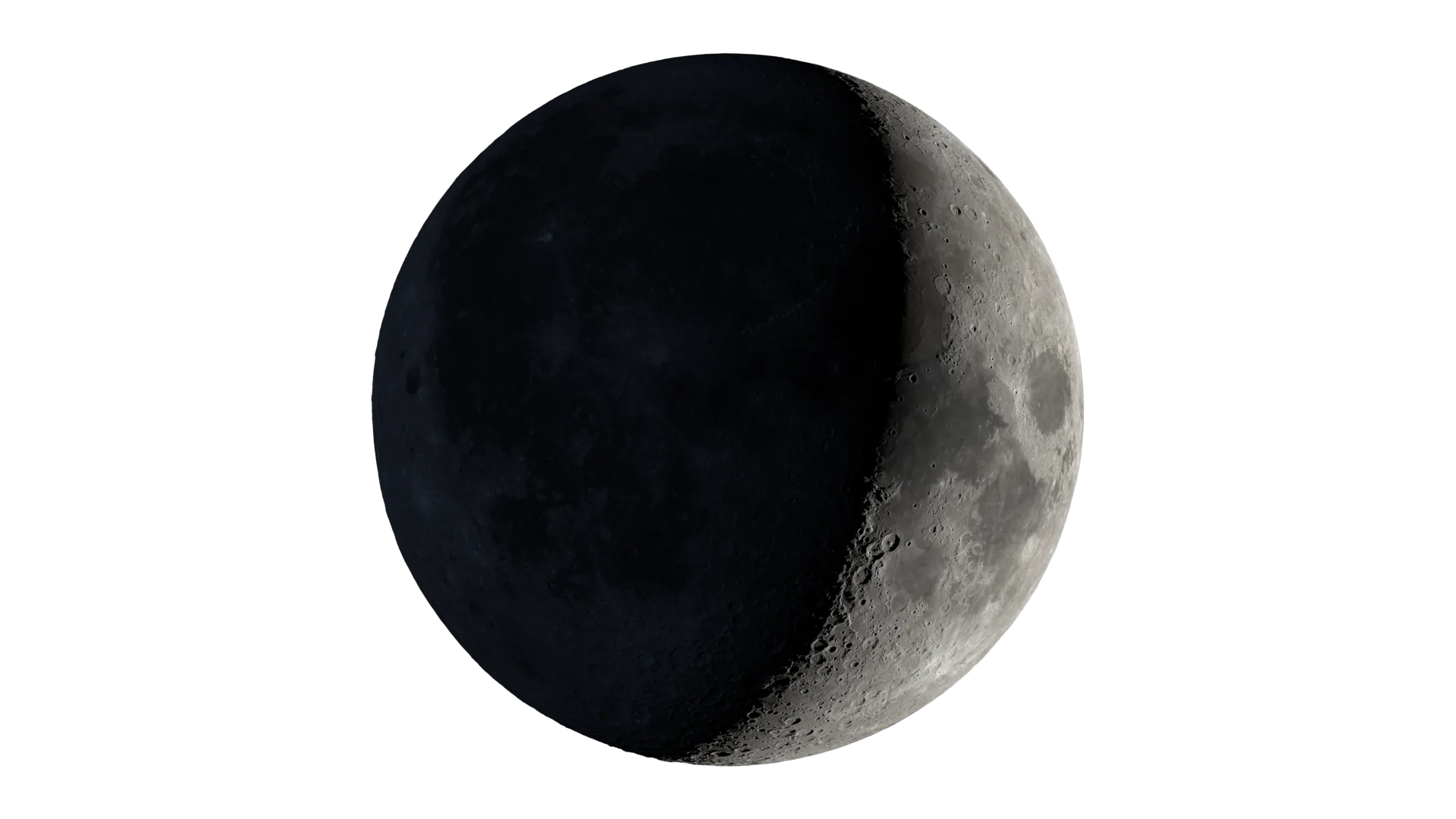
Before sundials, before clocks, before gears turned atop towers or ticked on wrists, there was the Moon: humanity’s first dependable pattern in a chaotic world.
Every 29½ days, the Moon completed its round. Unlike days, which blurred in weather, and unlike seasons, which stretched too long to mark in memory, the lunar cycle was graspable, visible, and steady. It became the middle beat between day and year. The Moon didn’t just light the night. It gave rise to the “month,” a bite-sized unit of existence that could be named, tracked, and shared.
The impulse to track it shows up long ago. The Ishango bone, notched some 20,000 years ago, may tally phases of the Moon. At Warren Field in Scotland, around 8000 BCE, a line of twelve pits traces lunations against the turning of the Sun, an early calendar carved in turf and shadow.
This wasn’t idle skywatching. It was survival. Lunar time told herders when to move flocks beneath bright nights, and coastal fishers when spring tides would surge with the new and full moons. Market days and caravans clustered around the full Moon, its light lengthening safe travel. Debts came due at the new Moon; festivals peaked at the full. Women counted cycles in parallel, weaving fertility and family into the same 29-day beat. The Moon was a communal metronome, syncing far-flung bands with a shared sense of when.
As civilizations formed, that rhythm sharpened into calculation. Babylonian scribes plotted the Moon’s motion with numbers; Chinese court astronomers forecast eclipses; Maya priests braided lunar months with solar and planetary cycles. When lunar months drifted off the seasons, priests added a leap month to stitch the sky back to the soil, a bookkeeping act that kept harvests, festivals, and taxes in tune.
But the lunar cycle’s biggest imprint wasn’t just practical. It carved the infinite into repeatable, knowable pieces. It lifted us out of the eternal present. It let us imagine next month. Plan a hunt. Anticipate a flood. Reunite with neighbors. The Moon taught us to think ahead—to imagine next month before it arrived.