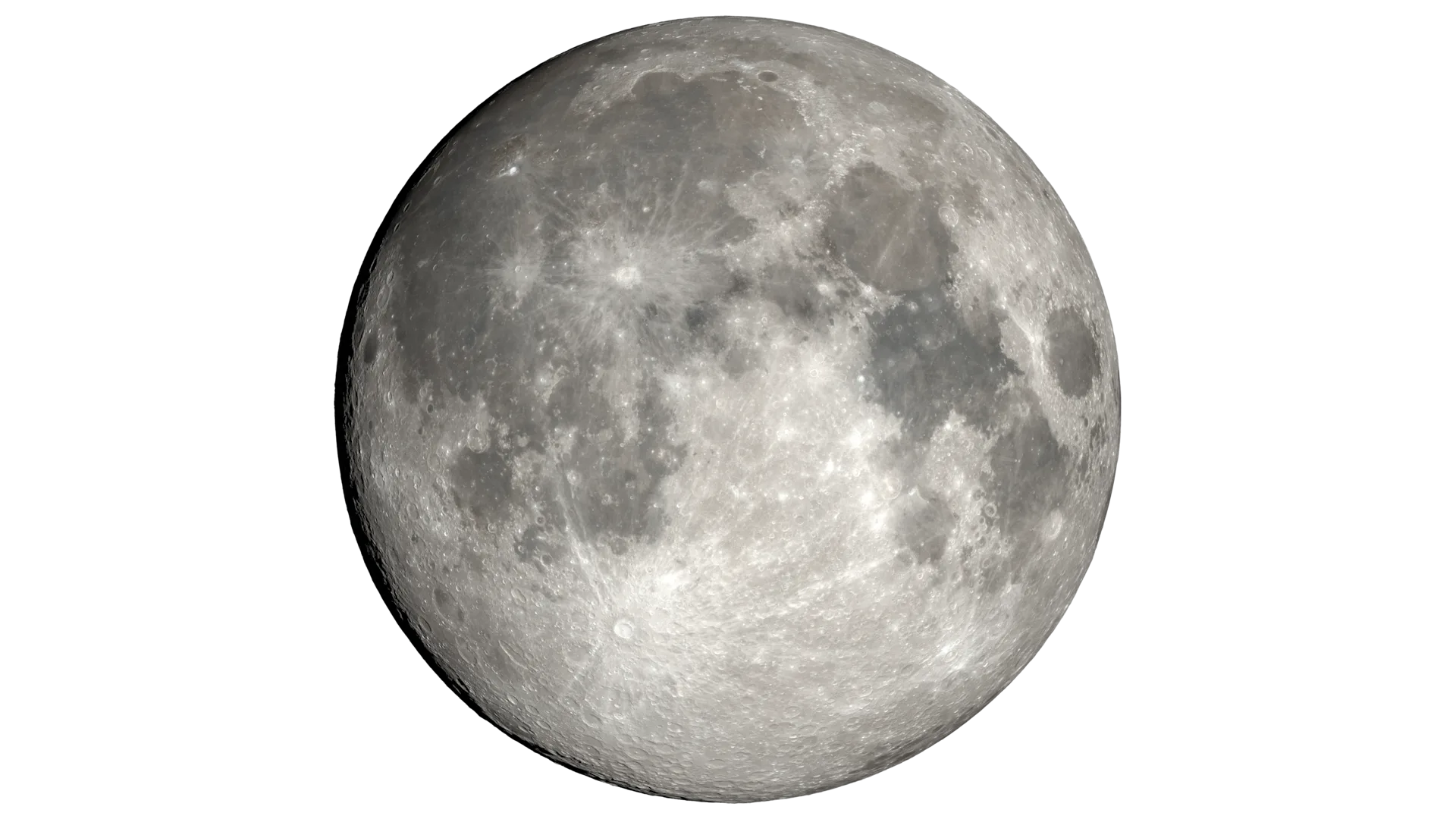
Look up tonight.
The Moon can seem like an auxiliary player in the universal scheme of things—small, lifeless, tethered to Earth. Yet nothing we value about our planet, or ourselves, would be the same without it.
As long as there has been life on Earth, the Moon has loomed large over it. It slowed our planet’s spin, steadied its climate, and helped cradle the conditions for biology to emerge. Before clocks ticked or calendars turned, it offered a reliable rhythm—a bright, silent metronome swinging across the night sky. The Moon did not merely light our way. It helped shape what we are.
From the first crescent scratched onto cave walls to the bootprints left in its dust, we have used the Moon to measure time, to tell stories, to imagine beyond ourselves. Lovers and sailors, farmers and poets, scientists and mystics—all have looked up and found meaning in its changing face. It became our first compass, our earliest myth, our oldest mirror.
In its borrowed glow, the arc of our species comes into focus: from bone tools and horned goddesses to telescopes and rocket fire. We learn that even what seems fixed—a scarred face, a steady sky—can change. That darkness is a prelude to light. That we, too, are always in motion.
The Moon’s greatest gift is the view it has offered in return. From that distant vantage, Earth becomes singular. Shared. Precious. The Moon showed us our home not as borders or divisions, but as one luminous whole, suspended in the dark.